Complete reference guide to the traditional Amazonian decoction: anthropological origins, pharmacology, hour-by-hour timeline, medical contraindications and legal status in Europe.
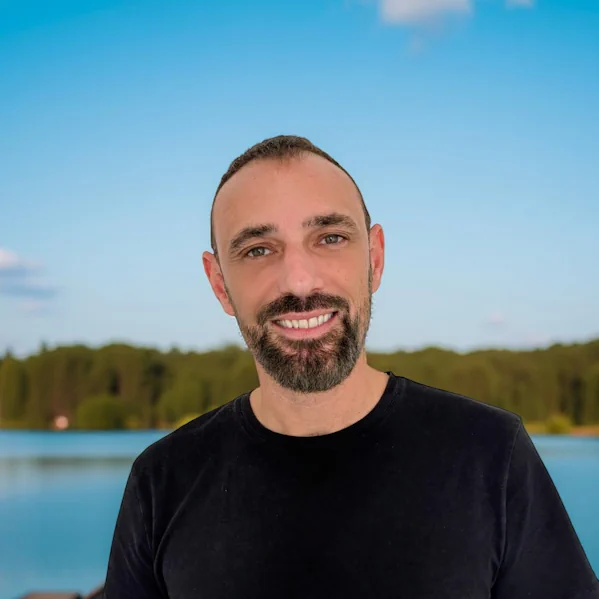
Reference guide written by Stéphane Lavergé, founder of Connecta Life and facilitator since 2012 — updated in 2026.
Connecta Life safety protocol: mandatory written medical questionnaire after booking, individual interview and review with partner doctors whenever a medication or sensitive signal appears.
What is ayahuasca?
Ayahuasca (from Quechua aya, meaning "spirit" or "ancestor", and waska, meaning "vine") is a traditional Amazonian decoction obtained by prolonged cooking of the bark of the Banisteriopsis caapi vine together with DMT-containing leaves, most often Psychotria viridis (chacruna). Its introspective, somatic and visionary effects last 4 to 6 hours.
More than a botanical preparation, ayahuasca is regarded in the Amazonian worldview as a "master plant" that guides inner work. The traditional chants that support the ceremony are called icaros; they structure the ritual setting among the Shipibo-Conibo, Asháninka, Tukano, Huni Kuin and Cofán peoples.
This content can become a lived experience
Connecta Life is not only an information website: we organize retreats in Catalonia in English or French depending on the date, in small groups, with preparation, support and a group online integration session 2 weeks after.
Across the western Amazon basin (Peru, Colombia, Ecuador, Brazil, Bolivia), the decoction carries different names depending on indigenous lineages: ayahuasca in Peru and Ecuador, yagé in Colombia, and caapi or nixi pae among the Huni Kuin. Traditionally, it was never taken in isolation or recreationally, but within a precise community framework guided by a practitioner trained through long forest dietas.
In the 20th century, three Brazilian syncretic religious traditions — Santo Daime, União do Vegetal (UDV) and Barquinha — formalized structured communal use, followed from the 1990s onward by observational studies and the emergence in Europe of small-group retreats combining ritual respect, written medical screening and integration work.
Botanical composition and pharmacological mechanism
The biochemical specificity of ayahuasca rests on the synergy of two plants. Taken orally on its own, DMT is immediately inactivated in the digestive tract by the monoamine oxidase A (MAO-A) enzyme. Beta-carboline alkaloids from the vine temporarily and reversibly inhibit this enzyme, making DMT orally bioavailable for several hours.
Botanical plant
Traditional names
Main active compounds
Pharmacological role
Banisteriopsis caapi (vine)
Ayahuasca, yagé, caapi, mariri
Harmine, harmaline, tetrahydroharmine (THH)
Reversible inhibition of digestive MAO-A and mild modulation of serotonin reuptake (via THH).
Psychotria viridis or Diplopterys cabrerana
Chacruna (leaf) or chaliponga / chagropanga
N,N-dimethyltryptamine (DMT)
Agonist at 5-HT2A, sigma-1 and 5-HT1A serotonergic receptors, supporting inner imagery and emotional processing.
It is precisely this action on the serotonergic system and MAO-A that explains the critical drug interactions with antidepressants (SSRIs, SNRIs, MAOIs) and certain psychotropic medications: combining them carries a serious risk of serotonin syndrome.
Effects of ayahuasca: hour-by-hour timeline
The intensity and nature of the experience vary from person to person and from one night to another depending on individual sensitivity, preparation (dieta) and the support setting. Below is the typical physiological and psychological arc of a nocturnal ceremony:
Phase
Indicative window
Common physical and psychological manifestations
1. Onset
0 to 45 min
Bitter, earthy taste of the brew, inner calm, gradual slowing down, initial tingling or sensation of warmth.
2. Come-up and purge
45 to 90 min
Shifts in auditory and closed-eye visual perception, emotional waves, possible nausea and purge (vomiting, yawning, trembling or tears).
3. Introspective plateau
1 h 30 to 3 h 30
Geometric or biographical inner imagery, vivid memories, relational insights, facing emotional blockages while remaining aware of the ceremonial setting.
4. Comedown
3 h 30 to 6 h
Gradual subsiding of visions, bodily lightness, calm lucidity, need for hydration, silence and rest.
5. Next day and integration
Day +1 to several weeks
Physical fatigue paired with emotional clarity ("afterglow"), morning sharing circle, followed by grounded integration into daily life.
What is an ayahuasca ceremony for?
The reasons for coming are multiple. Here are those we encounter most often:
Explore a difficult experience that has remained present for a long time (grief, abuse, accident)
Move through a period of blockage or exhaustion with a structured introspective setting
Deepen an existing spiritual practice (meditation, yoga, energy work)
Reconnect with the body and emotions after a period of dissociation
Ayahuasca is not a performance or leisure tool. Nor does it replace psychotherapeutic or medical follow-up — it can be a complement, within a coherent framework.
How does a ceremony unfold?
Preparation (2 to 14 days before) — dieta: no alcohol, no drugs, no red meat, no fermented foods, no refined salt or sugar, reduced sexual activity and definition of a clear intention.
Arrival at the retreat — welcome in the Montseny Natural Park, individual interview with the team, final medical and emotional check.
Nocturnal ceremony — each person receives an adjusted dose. The effects start in 30 to 60 minutes. The night (4 to 6 h) takes place in the ceremony room, lying down or seated, in silence or cradled by the icaros.
Purge — vomiting or sometimes bowel movements, considered in the tradition as a physical release of the « ill » (emotional or somatic).
Integration circle in the morning — sharing of the experience, collective listening, putting the lived experience into words.
Online post-retreat integration — group video session 2 weeks after returning home, with the participants, to take stock, revisit the experience and anchor it in daily life.
Risks, contraindications and who can participate
Ayahuasca is not for everyone. We apply a strict medical screening:
Absolute contraindications: personal history of schizophrenia, psychosis, mania/hypomania or bipolar disorder, severe heart disease, uncontrolled hypertension, pregnancy, breastfeeding, or being under age.
Psychiatric family history: any family history of schizophrenia, psychosis, mania/hypomania or bipolar disorder, including in a parent, sibling or child, requires individual assessment; it is not by itself a strict contraindication.
Medications and psychotropic treatments: SSRIs, SNRIs, MAOIs, certain antidepressants, antipsychotics, mood stabilizers and lithium require mandatory safety evaluation. Sensitive situations are reviewed with partner doctors. Any pause, reduction, substitution or restart must never be decided alone or under pressure from a retreat; the safety interval depends on the molecule, dose and clinical stability.
Recommendations: no recreational drugs in the previous 30 days, psychological follow-up advised for complex emotional processes.
After booking, a detailed medical questionnaire is sent immediately and an individual interview is arranged before acceptance: exact name of each medication, dosage, duration, date of last change and associated treatments. In case of doubt, we prefer to refuse and refund in full rather than take a risk.
⚠️ Contraindications: severe psychiatric history, cardiac pathologies, pregnancy, breastfeeding, psychotropic treatments, notably SSRIs, SNRIs, MAOIs, certain antidepressants, antipsychotics, mood stabilizers and lithium: mandatory safety evaluation, with partner doctors consulted when a sensitive signal appears. The safety interval depends on the molecule, dose and clinical stability; no treatment change should ever be decided alone or a few days before the retreat. Minimum age 18. Not a medical treatment, does not replace professional follow-up. Read the antidepressants and ayahuasca guide.
Legal status of ayahuasca: UK, USA, Canada, Europe and Spain
DMT is controlled under the 1971 Convention regardless of its origin. Plants and decoctions are also subject to national laws: absence of international control does not constitute local permission.
Country / Jurisdiction
Legal status of the decoction
Practical consequence
France & European Union
The French order of 20 April 2005 explicitly schedules Banisteriopsis caapi, Psychotria viridis, harmine and harmaline as controlled narcotics, alongside strict DMT controls across most EU jurisdictions.
Possession, preparation, transport and ceremonies are prohibited on French soil and in most EU member states, including in non-profit settings.
United Kingdom & Ireland
DMT and preparations containing it are classified as Class A controlled drugs under the UK Misuse of Drugs Act 1971 (and strictly controlled in Ireland), with no open legal exemption for ceremonies.
Participants from the UK and Ireland generally travel to a structured private setting in Spain, with direct flights of around 2 hours to Barcelona.
United States & Canada
DMT is a Schedule I substance under the US Controlled Substances Act and controlled under Canada’s Controlled Drugs and Substances Act, outside narrow federal exemptions granted to specific recognized churches.
Outside those specific religious exemptions, North American participants typically choose supervised retreats abroad, such as in Spain.
Spain (Catalonia)
Nuanced legal area in a private ritual circle: no automatic general authorization, but case-law distinction from synthetic DMT trafficking.
A private ceremony is not automatically lawful. Legal obligations and risks must be assessed for each situation; substances must not be carried across borders.
For full details on the Spanish legal context, safety comparisons with underground ceremonies and travel access to the Montseny, read our complete guide to ayahuasca retreats in Spain.
What scientific research and our Observatory observe
Since the 2000s, university teams in Brazil, Spain, the United Kingdom and Canada have studied the pharmacology and psychological effects of ayahuasca in peer-reviewed journals:
Mood and treatment-resistant depression — the randomized controlled trial by Palhano-Fontes et al. (2019, Psychological Medicine) and the pilot study by Osório et al. (2015) observed rapid shifts in depressive scores within strictly supervised hospital settings. Palhano-Fontes et al. · Osório et al.
Longitudinal follow-up of ritual users — work by Bouso et al. (2012, PLoS ONE) with members of ayahuasca churches found no evidence of cognitive decline or long-term addiction within a structured setting. Bouso et al.
Well-being and psychological flexibility — the observational study by Uthaug et al. (2018, Psychopharmacology) documents post-ceremony changes in affect and mindfulness, without establishing proof of causation. Uthaug et al.
Methodological caution: these scientific publications and observational data open avenues of understanding, but constitute neither guaranteed proof of causality, nor medical advice, nor a promise of cure. A ceremonial retreat is not a certified therapeutic intervention.
Why with Connecta Life?
Our commitment rests on 4 pillars:
Private and documented setting in Spain — no export, informed consent, supervised ceremonial context.
Safety framework — health questionnaire, medication compatibility checked with precise treatment details, continuous presence of an experienced facilitator.
Small groups — 8 to 16 participants per retreat. Individual support possible.
Integration included — the ceremony is only one step. The real transformation plays out in the weeks that follow, with a group online session 2 weeks after the retreat to support the return home.
Stéphane Lavergé has worked as a facilitator since 2012, after his own triggering journey (near-death experience, career transition after working as an IT engineer, training at the Floresiendo school). 550+ people have passed through Connecta Life to date. Retreats are led by the team assigned to each date; Stéphane is not present at every retreat.
Ayahuasca sits in Spain in a nuanced legal area when used in a private, religious or ritual setting. Some decisions and analyses have taken ceremonial use into account, but there is no general authorization making every context automatically legal. We work in a private circle, without export or public promotion of any substance, with informed consent and legal caution. To explore the Spanish legal context, travel access and practical preparation in detail, read our complete guide to Ayahuasca in Spain.
Why is ayahuasca prohibited in the UK, France and most of Europe?
DMT is scheduled under the 1971 UN Convention, and preparations containing DMT are classified as Class A drugs under the UK Misuse of Drugs Act 1971. Some countries go further by scheduling the plants themselves: the French order of 20 April 2005 explicitly lists Banisteriopsis caapi, Psychotria viridis, harmine and harmaline as controlled narcotics.
How long does a ceremony last?
An ayahuasca ceremony lasts 4 to 6 hours, generally at night. The effects start 30 to 60 minutes after ingestion and progress in waves. Regular formats: 3 days / 2 ceremonies · 4 days / 3 ceremonies. Special New Year edition: 5 days / 4 ceremonies · 6 days / 5 ceremonies. The detailed programme for each date specifies the medicines offered at each ceremony.
Will I vomit?
Nausea, vomiting or diarrhoea may occur. Some traditions give them symbolic meaning; they do not prove detoxification or healing and are not necessary for an experience. They can be distressing and cause complications: report any difficulty to the team.
How to prepare?
Dieta 2 to 14 days before: without alcohol, drugs, red meat, fermented foods, refined salt and sugar, and with a pause in sexual activity. Mental preparation: define a clear intention ("what am I coming to seek?"). Emotional preparation: do not arrive in a state of acute crisis, ideally with psychological follow-up underway if the process is heavy.
What are the risks?
Risks include drug interactions, physical complications and sometimes lasting psychological destabilisation. Screening and support do not eliminate them. Never stop, reduce or resume medication without the prescribing doctor. A retreat does not replace medical care.
What is the difference between ayahuasca, smoked DMT and Bufo Alvarius?
Ayahuasca acts orally over 4 to 6 hours through the combination of Banisteriopsis caapi (reversible MAOIs) and plant-derived N,N-DMT, allowing progressive inner work supported by chants. Inhaled N,N-DMT produces a very brief state (10 to 20 minutes) without the purgative dimension of the vine. As for Bufo Alvarius, it primarily contains 5-MeO-DMT (rather than N,N-DMT alone), a molecule with a distinct pharmacological and cardiovascular profile requiring its own specific precautions.
How much does an ayahuasca retreat cost?
Detailed prices on our pricing page. The packages include accommodation, meals (organic cuisine respecting the dieta), support before / during / after and a group online integration session 2 weeks after the retreat. No isolated ayahuasca ceremony — everything is part of a complete retreat with preparation and integration.
If you'd like to experience an ayahuasca ceremony, this is the perfect place. Located an hour from Barcelona, the setting is magnificent: a large, s…
Il est des expériences que les mots ne peuvent véritablement traduire, tant elles viennent toucher quelque chose de profond, au-delà de ce que l'espri…
I participated in a retreat with Stéphane and his team on October 7, 2026. A group harmony was instantly established with all the participants. Before…
J'ai vécu une très belle expérience avec l'équipe de connecta life ! Leur bienveillance et le lieu m'ont, également, permis de pouvoir accéder à ce qu…
La plus belle expérience que j’ai pu faire. Encadrement au top !! À l’écoute… généreux… dans le don de soi… des anges !!! C’est le plus cadeau que l’o…
Google Places selects up to five reviews using its own relevance criteria. The site displays every review received, without filtering by rating or editing the text, then orders them from newest to oldest. FR/EN/ES translations, the average rating and the total review count come directly from Google.